
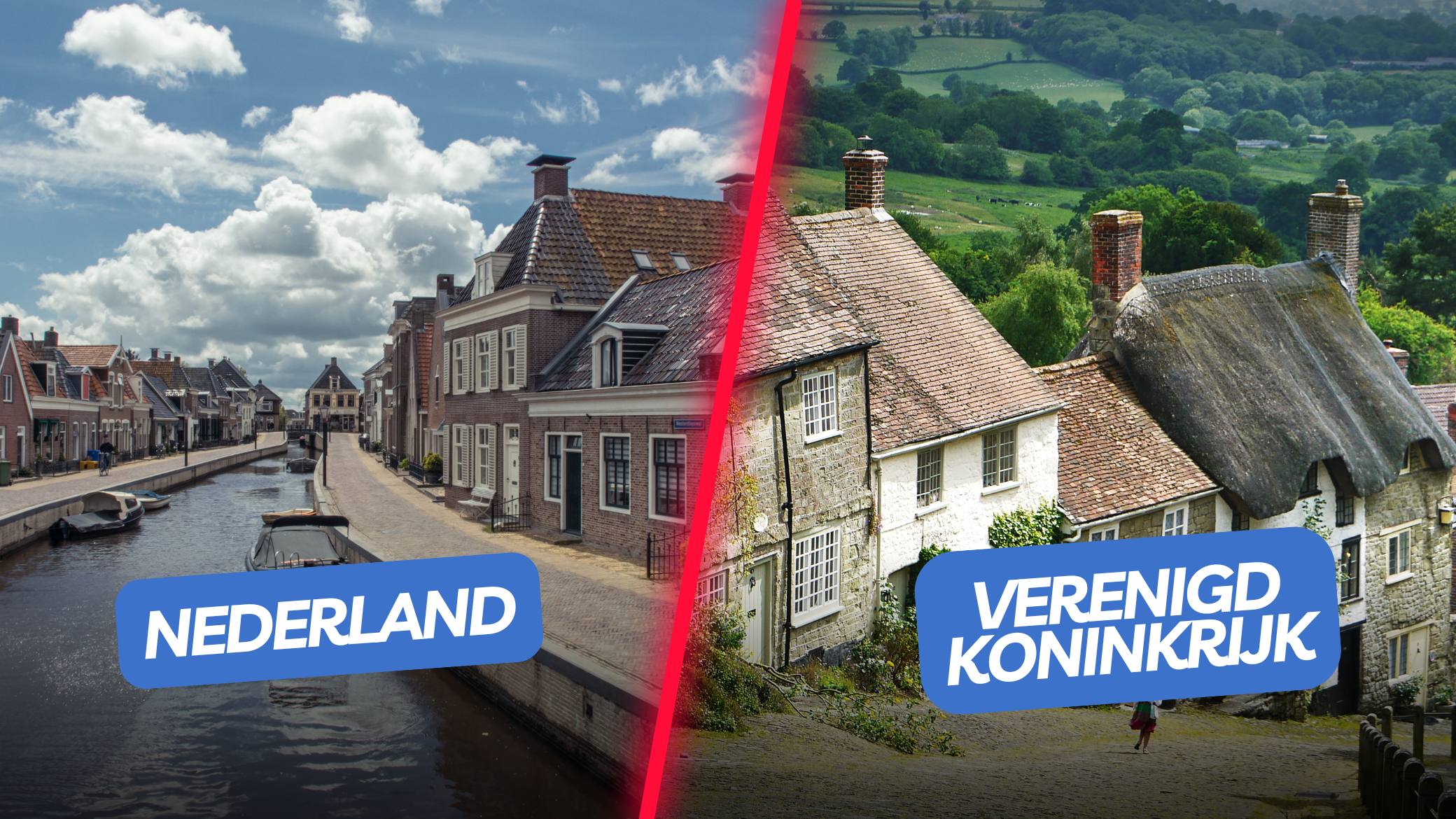
At Albion Invest, we guide Dutch investors who are looking beyond their national borders. The United Kingdom continues to prove itself as an attractive choice – and for good reason. Although the property markets in the UK and the Netherlands share many similarities, there are also clear differences that make the UK a compelling investment opportunity.
In this blog, we explore the key similarities between both markets. Whether you are considering purchasing your first property or are already an experienced investor, understanding both markets can help you make well-informed decisions and answer the question: “What makes UK property a logical next step for me as a Dutch investor, especially now that the Dutch investment climate has become increasingly restrictive?”
1. Legal Certainty
Both the Netherlands and the United Kingdom have strong legal systems that firmly protect property rights. This provides property investors with a stable and secure investment environment.
In both markets, real estate transactions involve thorough legal due diligence. As a buyer, this ensures that all documentation and ownership rights are properly verified. This significantly reduces risks and offers peace of mind, whether you invest in the Netherlands or the UK.
Legal certainty is crucial, especially when allocating a significant portion of your wealth to property.
2. Market Transparency
In both countries, the property market is transparent and well-structured. Information about rental prices, market values, transactions, and developments is relatively accessible. This makes it possible to make data-driven decisions and carefully plan investments.
One notable advantage in the United Kingdom is that transparency often goes even further. Through online platforms and official registers, data on ownership, transaction history, and property records is often more quickly and easily accessible than in the Netherlands. This accessibility provides investors with a clear market overview and simplifies the search for valuable opportunities.
3. Strong Demand for Rental Properties
Both the Netherlands and the UK face significant housing shortages, particularly in urban areas.
In the Netherlands, the housing shortage in 2023 was approximately 315,000 homes (around 4% of the total housing stock). This shortage is most strongly felt in the rental market, where demand exceeds supply.
In the United Kingdom, the estimated housing shortage is around 4.3 million homes. This has led to strong demand for rental properties, particularly in cities such as London, Manchester, Liverpool, and Birmingham.
This structural shortage creates consistent rental demand, increasing the likelihood of long-term tenancies and stable rental income.
4. Economic Stability
Both the Netherlands and the United Kingdom offer a solid economic foundation for property investments. They are major trading nations with well-developed infrastructure and strong international connections. This stability attracts businesses and fuels housing demand, particularly in urban regions.
Unemployment rates in both countries are relatively low. In 2023, unemployment in the Netherlands stood at approximately 3.5%, while the UK recorded around 4%. This economic stability contributes to a reliable rental market and is a key factor for investors seeking long-term security.
5. Regional Opportunities Beyond Capital Cities
Both countries offer attractive investment opportunities outside their capital cities.
In the Netherlands, investors increasingly focus on cities such as Rotterdam, Eindhoven, and Groningen, where rental demand is growing and prices remain relatively attractive.
In the UK, a similar trend is visible. Cities like Leeds, Manchester, Liverpool, and Birmingham have developed into investment hotspots. Surrounding towns are also becoming increasingly attractive due to economic growth, infrastructure investments, and population increases.
These regions often offer higher yields than London while maintaining strong and stable rental demand. Albion strategically focuses on these high-potential locations.
6. Focus on Sustainability
Sustainability is playing an increasingly important role in both markets. Stricter regulations, such as energy performance requirements and insulation standards, are encouraging property owners to invest in energy-efficient housing. This not only benefits the environment but also enhances property value and tenant appeal.
In the Netherlands, energy labels are mandatory when renting or selling property. In the UK, the Minimum Energy Efficiency Standards (MEES) require rental properties to have at least an EPC rating of E, with plans to move toward EPC C in the future.
It is important to note that the UK currently lags several years behind the Netherlands in sustainability standards. While the Netherlands is advancing toward net-zero homes, solar panels, heat pumps, and high-efficiency glazing, in the UK improvements often focus primarily on insulation, double glazing, and modern central heating systems.
7. Financial Accessibility
Both countries offer diverse financing options for property investors, lowering the entry threshold.
Mortgages are widely used in both markets by private and professional investors. This allows investors to acquire property with relatively limited personal capital while generating returns.
In the UK, the buy-to-let mortgage is a well-established and attractive product specifically designed for property investors. It often offers flexible terms and focuses on rental income potential. Additionally, the UK market provides various specialized financing options, including bridging loans, development loans, and HMO commercial loans.
It is worth noting that obtaining a first mortgage can be the most challenging step. Once you are on the “mortgage ladder,” securing additional financing becomes easier. Some investors choose to purchase with cash initially and refinance later. Foreign investors should also consider that an interest rate premium often applies compared to standard domestic rates.
8. Tax-Efficient Structures
Both countries provide opportunities to structure property investments tax-efficiently.
The UK offers attractive arrangements for buy-to-let investors, such as deductible expenses and relatively low corporate tax rates when investing through a Limited company. In the Netherlands, investors may benefit from Box 3 taxation, provided the property qualifies as an investment rather than a business activity.
Furthermore, the Netherlands and the UK have a tax treaty in place to prevent double taxation. This simplifies cross-border investment and can enhance overall returns.
9. Demand-Driven Markets
Both property markets are strongly demand-driven. Population growth, urbanization, and structural housing shortages continue to create sustained demand for housing.
In the Netherlands, rental demand is particularly strong in the mid-market segment. In the UK, the buy-to-let sector continues to thrive, offering opportunities in both social housing and the private rental sector.
This demand-driven dynamic makes property in both countries an attractive and relatively secure investment option.
Conclusion
Thanks to shared characteristics such as legal certainty, transparency, and strong rental demand, the UK property market feels familiar to many Dutch investors—while offering unique growth and return opportunities.
Curious about the key differences between the Netherlands and the United Kingdom? You can explore them in our next blog.