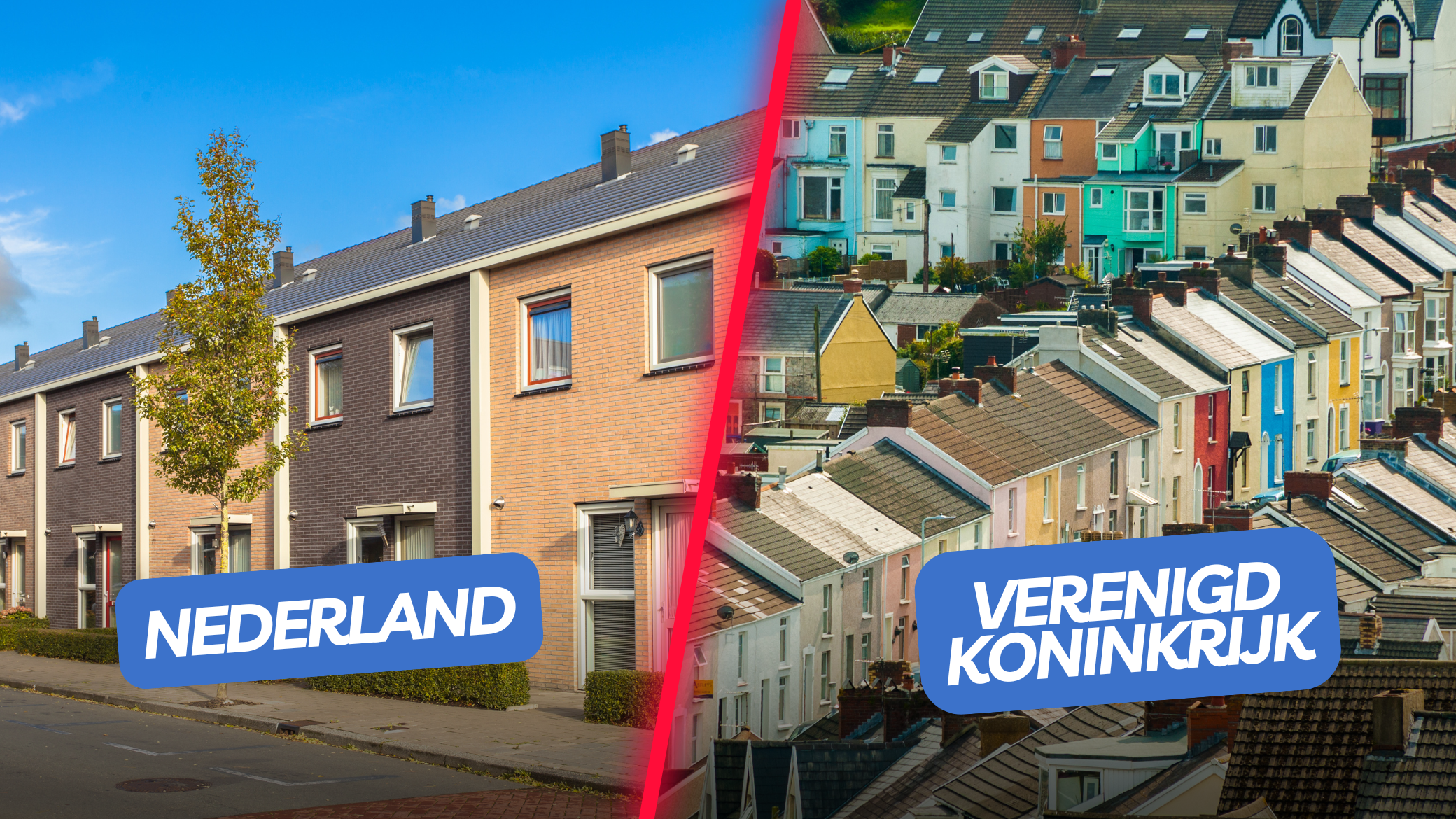
Although there are many similarities between the real estate markets in the Netherlands and the United Kingdom (read blog), it is precisely the differences that make the UK so attractive to Dutch investors. These differences offer unique opportunities, such as flexible financing options, lower entry prices in emerging regions, and less complex regulations regarding property conversions, for example.
1. Price Levels and Returns
One of the most striking differences between the Netherlands and the United Kingdom is the price level of real estate. In the Netherlands, particularly in the Randstad area, property prices are often high, increasing the entry threshold for new investors. In contrast, many cities in the United Kingdom offer significantly lower property prices while still delivering attractive returns.
Outside London, the UK offers numerous investment opportunities. Here, you can find quality real estate at relatively low prices. Think of apartments and houses available from €100,000 to €200,000 — amounts that are often unattainable in Dutch urban areas.
Where gross yields in Dutch cities typically range between 3% and 5%, returns in the UK can reach 8% or even 10% in certain regions. These higher returns are made possible by lower purchase prices combined with stable rental demand. Especially in emerging cities where economic growth and infrastructure projects are underway, such as in Northern England, opportunities are significant.
For new investors, the UK therefore offers a more accessible market. Lower entry prices make it possible to build an attractive portfolio with a relatively modest budget.
2. Financing Options
In the UK, investors have access to buy-to-let mortgages, specifically designed for rental investments. These mortgages offer flexible terms, such as interest-only options, and typically allow financing up to 75% of the property value. This means investors must contribute more equity, contributing to a more stable market.
The lower financing percentage makes purchasing more difficult for many UK residents, which increases rental demand. This strengthens the rental market and creates opportunities for investors to benefit from stable rental income.
In the Netherlands, such mortgage options are less common, and rental mortgages are often more expensive and restrictive. Additionally, residents can generally finance up to 100% of a property’s value with a mortgage, making it relatively easier for first-time buyers to enter the property market. As a result, pressure on the rental market is significantly lower than in the UK.
3. Tax System
The tax systems differ substantially between the Netherlands and the United Kingdom. In the Netherlands, investments fall under the “box system,” with real estate typically taxed in Box 3 based on a deemed (fictitious) return. This can result in unpredictable and sometimes high tax burdens.
In the UK, since 2020, investments are often structured through a Limited company, offering tax advantages such as deductible expenses and relatively low corporate tax rates. This structure provides greater flexibility and can be more attractive for investors looking to manage their portfolio efficiently.
4. Tenant Protection and Rental Regulations
A notable difference between the Netherlands and the United Kingdom is the level of tenant protection and rental regulation.
In the Netherlands, tenants have strong rights, with extensive protection and strict rent control rules. Since recent legislative changes, including the Affordable Rent Act, it has become even more challenging to realize the benefits of property investment. Landlords have less freedom to adjust rents, even when market conditions allow it. Additionally, evicting tenants can be difficult, limiting investor flexibility.
In the United Kingdom, the situation is quite different. The rental market is more flexible, with shorter tenancy agreements (typically six months to one year) and simpler procedures for increasing rents. It is also easier to terminate a tenancy agreement, provided contractual terms are followed.
This flexibility gives UK landlords more control over their investments and allows them to respond more quickly to market changes, such as rising rents. The rules governing the landlord-tenant relationship are set out in a clear and straightforward legal framework known as the Landlord and Tenant Act.
5. Versatile Property Market
The United Kingdom offers investors a wide range of property strategies, which is one of the biggest differences compared to the Netherlands. In the Netherlands, opportunities are often more limited due to regulations, high entry costs, and complex permit procedures — unless investors are very creative. In the UK, there is more flexibility and room for creative investment approaches.
Common strategies in the UK include:
- Buy to Let
- Fix & Flip
- Short-term & Corporate Let
- Conversions (commercial to residential, a personal favorite of Rick)
- Social Housing
- House of Multiple Occupation (HMO)
- New Build & Off-plan
- Strategy diversification
The UK market allows multiple strategies to be combined within one portfolio. Investors can, for example, choose a mix of buy-to-let properties, short-term rentals, and conversion projects. This enables risk diversification while maximizing returns.
6. Geographical Spread of Opportunities
An important difference between the Dutch and UK real estate markets is the geographical distribution of investment opportunities.
In the Netherlands, the focus is heavily concentrated on urban areas such as the Randstad, where housing demand is highest. This means investors often limit themselves to a small number of cities, such as Amsterdam, Rotterdam, and Utrecht, where entry costs are high and yields relatively low.
In the United Kingdom, the market is far more geographically diverse. Outside London, cities such as Manchester, Birmingham, Leeds, and Liverpool offer attractive investment opportunities. Surrounding towns and cities can also be highly interesting.
These locations have lower entry prices while maintaining strong rental demand driven by population growth and economic development.
Cities in Northern England, such as Manchester and Leeds, benefit from substantial investments in infrastructure and urban regeneration. This has led to economic growth, an influx of young professionals, and increasing housing demand. Such regional growth provides investors with opportunities to benefit from both capital appreciation and rental income in emerging markets.
The broader geographical spread of opportunities in the UK enables investors to diversify their portfolios more effectively. By investing across multiple cities or regions, investors can spread risk and benefit from different market trends within one country.
7. Large Property Supply
One of the most attractive aspects of the UK property market is the extensive and diverse range of investment opportunities.
In the Netherlands, especially in the Randstad, suitable investment properties are often limited in supply. Finding quality properties at attractive prices can therefore be challenging.
In the United Kingdom, however, there is an abundance of real estate opportunities. This ranges from existing homes and new-build projects to commercial properties suitable for conversion.
The UK property market is not only large but also highly diverse. Investors can choose turnkey rental properties, renovation projects, or buildings suitable for residential conversion. This diversity makes it possible to create a portfolio aligned with personal strategies and goals.
8. Government Support – Investors Are Welcome
A major difference between the Netherlands and the United Kingdom is the government’s attitude toward property investors.
In the Netherlands, investors increasingly face restrictions, such as higher tax rates, stricter rental regulations, and initiatives aimed at reducing the share of investors in the housing market. These measures make it more difficult to achieve profitable investments, and the stigma around property investment continues to grow.
In the United Kingdom, the government’s stance toward investors is considerably more positive. Investors are viewed as an essential part of solving the housing shortage and stimulating economic growth.
This is reflected in various incentives and measures designed to attract investors, such as:
- More flexible regulations: Less strict rental rules and simpler procedures for conversions and new builds.
- Tax advantages: Opportunities to deduct costs and benefit from favorable tax regimes through a Limited company.
- Active support: Governments support housing development projects and offer financial incentives to developers and investors.
The positive investment climate in the UK ensures that investors feel welcome and can fully focus on optimizing their portfolios.
9. Investing Through a Limited Company
A unique advantage of investing in the United Kingdom is the ability to purchase and manage property through a Limited (Ltd) company.
This legal structure offers investors numerous advantages that are often more difficult to achieve in the Netherlands.
A Limited operates under the UK corporate tax system, which can be significantly more favorable than the Dutch Box 3 system. Expenses such as interest, maintenance, and management costs can be deducted directly from profits, reducing the tax burden and increasing net returns. In the early years, it is often possible to pay little to no tax.
Investing through a Limited provides a professional structure ideal for building a larger portfolio. It makes it easier to attract financing, collaborate with other investors, and maintain efficient administration.
Moreover, a Limited can issue shares, offering flexibility for future expansion or acquisitions. From a long-term perspective, including succession planning and inheritance considerations, this structure can be highly attractive.
For foreign investors, such as Dutch nationals, a Limited also offers additional benefits, including the avoidance of double taxation thanks to tax treaties between the Netherlands and the UK.
Conclusion
The differences between the Dutch and UK real estate markets highlight why the United Kingdom is an attractive choice for investors.
From lower entry prices and higher returns to flexible financing options and a positive investment climate, the UK offers unique opportunities that are often less accessible in the Netherlands.
Additionally, the diversity of investment strategies, the geographical spread of opportunities, and the possibility of investing through a Limited create a market where investors feel welcome and supported. While the Netherlands continues to impose increasing restrictions, the UK provides an environment focused on growth and innovation.
Would you like to read the blog in which we further explain the similarities between the Netherlands and the United Kingdom? Read it here.